The Sultan’s Offering: The Gunungan Estri in the Procession of Soldiers at the Garebeg Celebration

Kelanawisata/frm
|
02 Januari 2026
|
595x Dilihat
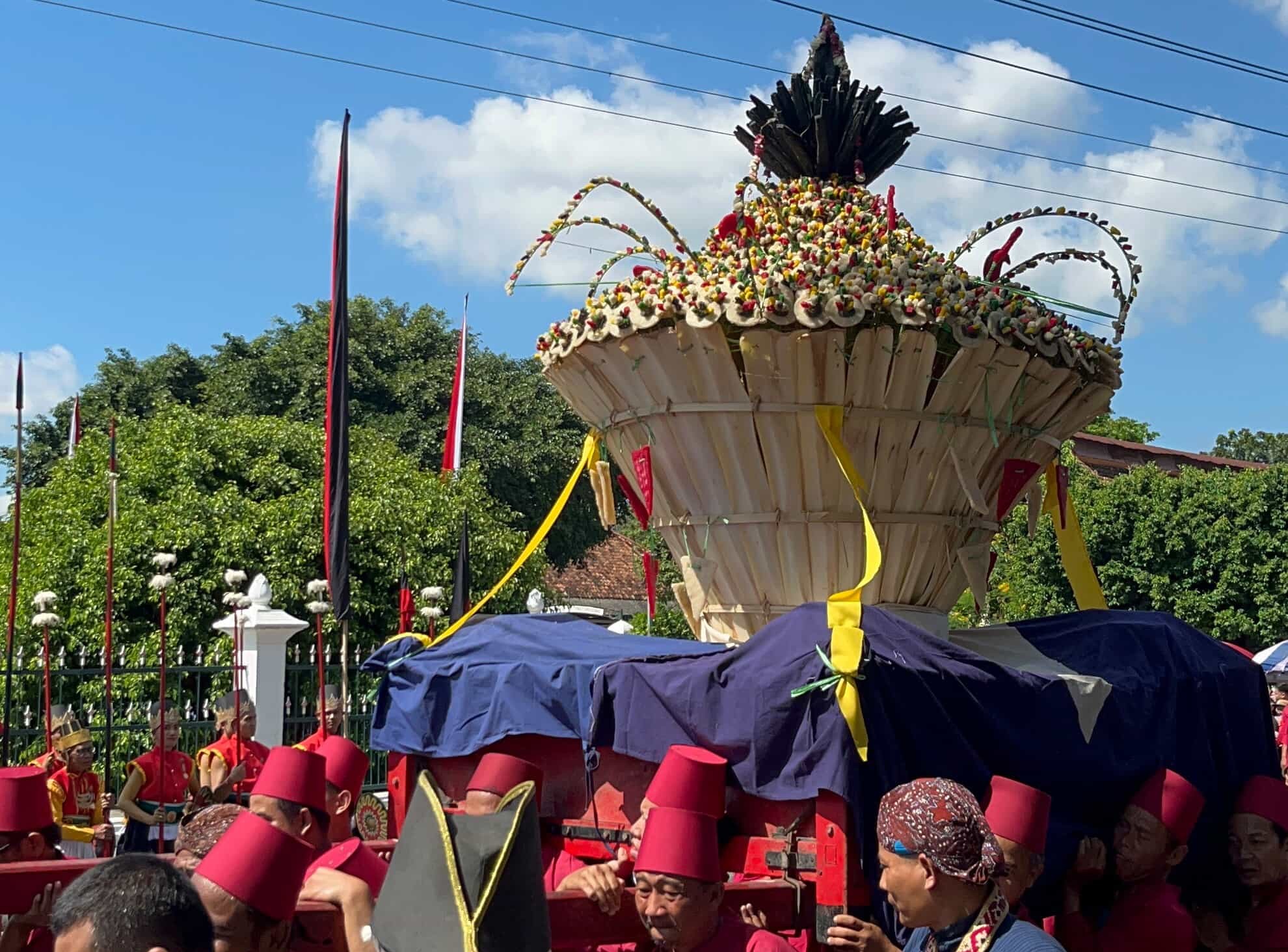
Kelanawisata.id, Yogyakarta — Fellow Travelers, if we have previously marveled at the majesty of the towering Gunungan Kakung, then our journey through the heart of Yogyakarta’s culture would not be complete without getting to know its counterpart. Much like the harmony of nature that always comes in pairs, the Yogyakarta Palace also presents a figure symbolizing gentleness, fertility, and compassion: the Gunungan Estri.
Amid the festivities of Garebeg Sekaten, the Gunungan Estri appears in an elegant form, carrying a profound message about how a leader honors his people. There is one Gunungan Estri, which is contested in the courtyard of the Gedhe Kauman Mosque in Yogyakarta. This gunungan is paraded behind a procession of Surokarso soldiers.
For fellow travelers hearing this term for the first time, Gunungan Estri is one of several types of gunungan displayed during the Hajad Dalem Garebeg. This tradition is a form of gratitude and charity from the Sultan to his people to commemorate the Prophet Muhammad’s birthday, Eid al-Fitr, and Eid al-Adha. The Hajad Dalem Garebeg procession is held three times a year: Garebeg Maulud, Garebeg Syawal, and Garebeg Besar.
The Estri Mountain is not merely a pile of food, but a “medium of cultural diplomacy” used since the time of the Wali to spread Islamic values through local wisdom. This tradition remains preserved, connecting spirituality with the people’s joy in a single sacred ceremony. While the Kakung Mountain has a sharp conical shape, the Estri Mountain (female) resembles a Bokor. Its shape widens at the top and resembles an inverted bell.
This form symbolizes femininity, representing fertility, a place of refuge, and the womb of life. Visually, the Gunungan Estri conveys a softer, more embracing impression, reflecting the character of a mother who constantly shelters her children.
The filling inside the Gunungan Estri consists of an upper section shaped like a Mustaka, containing black glutinous rice cakes. If you look closely at the peak or Mustaka, you’ll be greeted by a row of unique black strands resembling long tongues. Below, a symphony of colors unfolds through rows of sabunan—rolls of banana leaves adorned with white glutinous rice grains and colorful specks of glutinous rice.
This beauty is further enhanced by a beautifully arranged circular spread of white rengginang, where each piece is adorned with red bethetan decorations resembling the head of a betet bird. Not to be forgotten are the dangling decorations, gracefully hanging like small penjor poles, creating an artistic harmony of red, yellow, green, and even black hues. This blend of traditional ornaments not only delights the eyes but also demonstrates the meticulous detail of the culinary artistry that the Palace presents to its people.
To witness the Gunungan Estri, travelers can visit the Garebeg procession held in Yogyakarta or Surakarta. The Gunungan is displayed by the Palace three times a year. If you’re in Yogyakarta, you can head to the courtyard of the Masjid Gedhe Kauman or the Bangsal Pagelaran at the Palace.


