The Royal Security Guards: From Soldiers to Cultural Guardians

Kelanawisata/frm
|
15 Oktober 2025
|
503x Dilihat
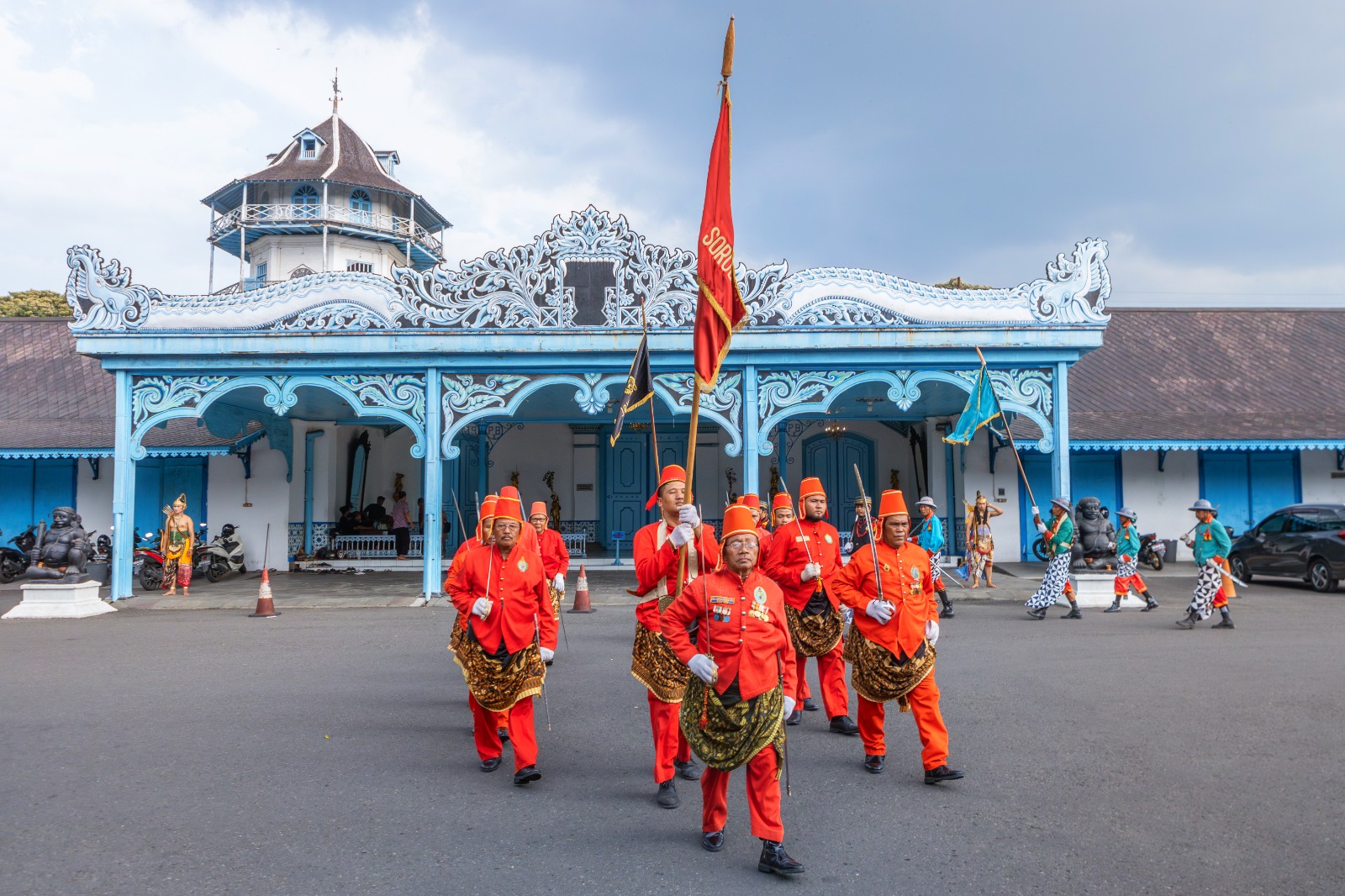
kelanawisata.id, Surakarta – In the past, the soldiers of the Surakarta Hadiningrat Palace served as the guardians of the kingdom’s security. They were the royal army responsible for taking part in wars. The weapons they carried into battle included bedhil (guns), arrows, swords, and spears.
As time went on, their function gradually changed, and they no longer served as war troops. Today, the Surakarta Palace soldiers have shifted roles into cultural guardians. According to research by Tejo Bagus Sunaryo and Jussac Maulana Masjhoer published in the Jurnal Masyarakat Budaya, this transformation occurred after the independence of the Republic of Indonesia.
This shift was influenced by changes in the governmental structure of the Surakarta Palace. Initially, the palace stood as its own state. However, after joining the Republic of Indonesia, the Surakarta Palace was transformed into a cultural heritage site.
The palace soldier brigades have existed since the reign of Paku Buwono II. During his leadership, the Surakarta Palace soldier brigades consisted of 14 types. Today, under the leadership of Paku Buwono XIII, there are 9 types of brigades. These brigades are the Musical Corps Brigade, Tamtama, Jayeng, Astra Musical Corps, Prawira Anom, Sarageni, Darapati, Jayasura, Baki, and Nyutra or Panyutra.
The Surakarta Palace soldiers appear during the Garebeg celebrations. Garebeg is generally held three times a year: Garebeg Pasa, Garebeg Besar, and Garebeg Mulud. Garebeg Pasa is held to celebrate Eid al-Fitr, Garebeg Besar is held during Eid al-Adha, while Garebeg Mulud is held to commemorate the birthday of Prophet Muhammad.
Today, the Surakarta Palace soldier brigades no longer function as war troops. Instead, they perform cultural attractions as guardians of cultural heritage. The brigades accompany the Garebeg procession, which is carried out as an expression of the palace’s gratitude for abundant blessings. This cultural performance also supports the development of tourism attractions in the city of Surakarta.


