Wonosobo Regency Government Strengthens the Tourism Ecosystem Through Integrated Management and Promotion

Disparbud Kabupaten Wonosobo
|
04 September 2026
|
105x Dilihat
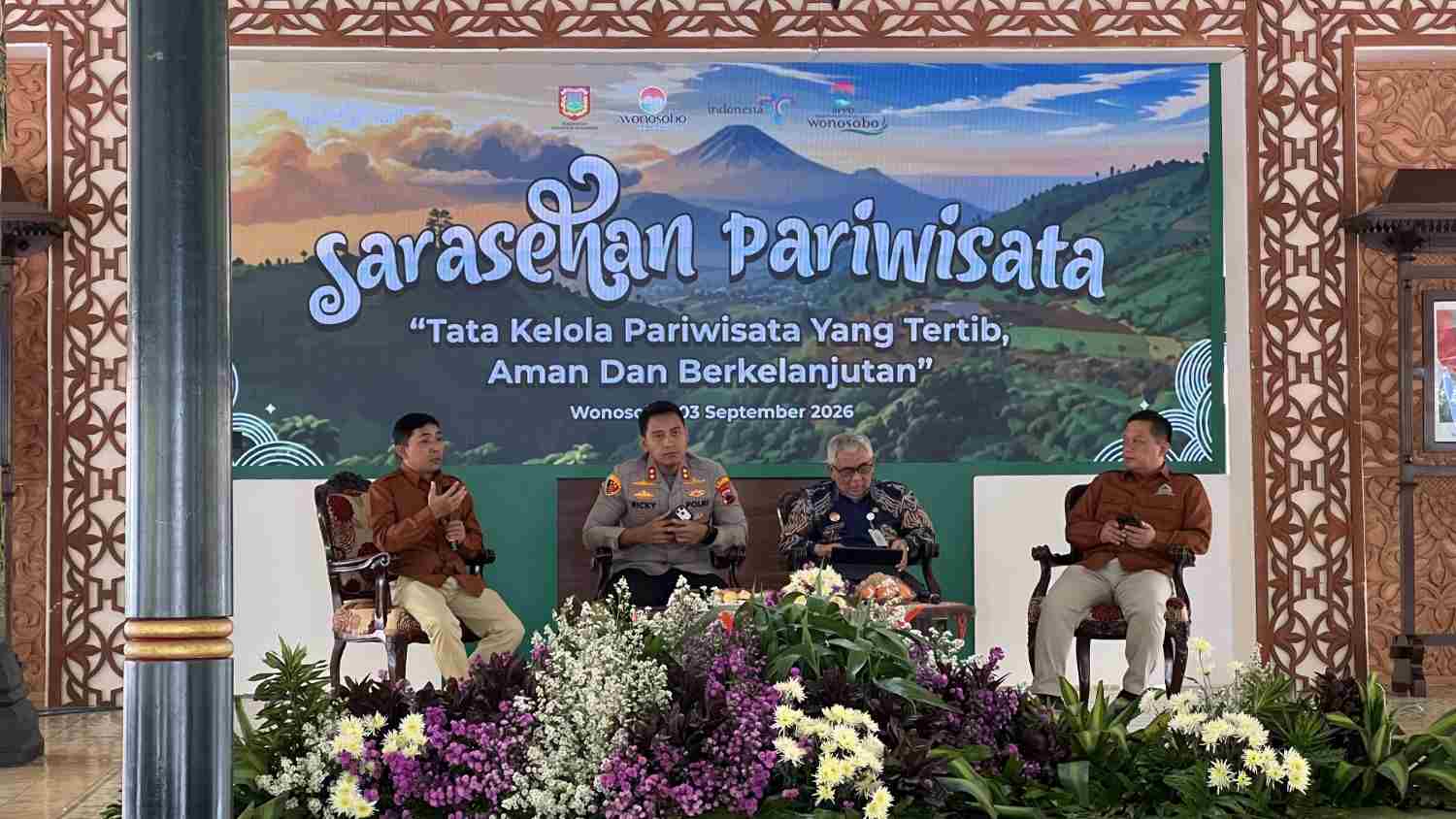
Kelanawisata.id, Wonosobo – Strengthening professional, safe, and sustainable governance, along with integrated promotional strategies, serves as a crucial foundation for driving the advancement of the tourism sector in Wonosobo Regency. These efforts are not only aimed at enhancing the quality of the tourist experience but also at ensuring that tourism generates broader economic benefits for the community.
This was one of the key topics discussed at the Tourism Governance Symposium and the Inauguration of the Wonosobo Regency Omah Wisata Regional Tourism Promotion Board (BPPD) for the 2025–2028 term, which took place at the South Pendopo of Wonosobo Regency on Thursday, September 3, 2026.
On this occasion, 40 members of the BPPD Omah Wisata Wonosobo Regency executive board were officially inaugurated. The board consists of four advisors and 36 executive members. Andra Bharada was appointed to lead the BPPD Omah Wisata Wonosobo Regency for the 2025–2028 term.
In his remarks, Wonosobo Regent Afif Nurhidayat stated that tourism is one of the strategic sectors with significant potential to support regional development. According to him, tourism is not merely about the existence of destinations, but also about how natural resources, culture, creativity, and the hospitality of the local community can be optimally managed to deliver tangible benefits.
“Destinations must be well-managed, with quality service, easily accessible information, and an increasingly positive visitor experience,” he emphasized.
Afif noted that Wonosobo possesses a wide variety of tourism assets. These range from the Dieng Plateau and Wadaslintang to mountains, lakes, waterfalls, tourist villages, arts and culture, traditions, cuisine, the creative economy, and the friendly nature of the local community. All of this potential, he explained, needs to be developed and packaged professionally to keep pace with changing tourist needs and behaviors.
Current shifts in tourist behavior mean that a destination’s appeal is no longer determined solely by its natural beauty. Factors such as safety, comfort, accessibility, service quality, ease of obtaining information, the authenticity of the experience, and the level of trust in the destination within the digital space also play a role in determining travel decisions.
Therefore, the success of the tourism sector cannot be measured solely by the number of visitors. The length of tourists’ stays, local spending, the quality of the experience, and the extent of economic benefits received by the local community are also important indicators that must be taken into account.
“Tourism must be a driver of the local economy. The presence of tourists must open up opportunities for farmers, small and medium-sized enterprises (SMEs), the culinary sector, transportation, trade, the creative economy, arts and culture, home-based industries, and various other community-based businesses,” he said.
Afif continued, noting that the Wonosobo Regency Government is also creating opportunities for investments that can strengthen the tourism ecosystem, open up business opportunities and create jobs, while also generating added value for both the community and the region.
With an increasingly robust tourism ecosystem, growth in this sector is expected not only to boost community economic activity but also to strengthen the regional economy and contribute to an increase in Local Revenue (PAD).
On the governance front, Afif emphasized the need for continuous improvement to ensure that tourism management becomes more transparent, standardized, professional, and sustainable in the long term.
Aspects such as cleanliness, safety, comfort, service, transparency of information, and the capacity of managers must continue to be improved. At the same time, tourism development must continue to prioritize the preservation of the environment, ecosystems, water resources, and the social and cultural character of the local community.
“Integrity, transparency, accountability, and professionalism must be the way we work,” he asserted.
Promotions Must Build Interest and Trust
Technological advancements are also a key consideration in Wonosobo’s tourism marketing strategy. Today’s travelers increasingly rely on social media, search engines, videos, reviews, and various digital platforms as sources of information before deciding which destinations to visit.
Therefore, tourism promotion must go beyond simply conveying information about the destination’s existence. Promotions need to be developed to build interest, increase trust, and ultimately encourage tourists to make the decision to come and visit.
In this context, the BPPD Omah Wisata is expected to play a more strategic role. The BPPD functions not only as an implementer of promotions but also as a space for formulating ideas and as the driving force behind Wonosobo’s tourism marketing.
The BPPD is expected to be able to analyze emerging trends in tourism, identify the right market segments, and expand its network with travel agencies, digital platforms, hotels, communities, the media, the business sector, and various other stakeholders.
The development of tourism packages, the strengthening of destination storytelling, the creation of an events calendar, and the integration of destinations with MSMEs and the creative economy sector are also considered crucial. These steps are necessary to create a more comprehensive tourism experience while encouraging tourists to explore more of Wonosobo’s potential.
“Wonosobo’s tourism brand must be strong and consistent. It should be known not only for the sunrise in Dieng, but also for its nature, culture, cuisine, adventure, and the authentic way of life of its people,” he said.
Destinations that have not yet been optimally promoted also need to be continuously developed so they can be included in tourists’ itineraries. With more options for activities and destinations, tourists are expected to have reasons to stay longer, increase their spending while in Wonosobo, and involve the local community as active participants in the tourism industry.
Collaboration Driving Force for Tourism Development
The Wonosobo Regency Government recognizes that tourism development cannot be achieved by the government alone. The involvement of the business sector, village governments, communities, and the general public is essential in building a strong and sustainable tourism ecosystem.
The Omah Wisata Tourism Development Board (BPPD) is also expected to serve as an open, healthy, productive, and results-oriented space for collaboration. Every program implemented is expected to have clear, measurable objectives and to be carried out with a sense of accountability.
The inauguration of the Omah Wisata BPPD for the 2025–2028 term is expected to serve as a catalyst for strengthening promotion and marketing, expanding networks, and enhancing the image of Wonosobo as a destination amid the dynamics and competition of an increasingly evolving tourism industry.
Following the inauguration, the event continued with the Wonosobo Tourism Governance Forum, which featured three speakers offering different yet complementary perspectives.
Wonosobo Police Chief AKBP Ricky Pripurna Atmaja delivered a presentation titled “Safe and Orderly Tourism Governance.” The presentation highlighted the importance of safety and order as an integral part of a destination’s quality and the comfort of tourists.
Next, Wonosobo Regency Secretary One Andang Wardoyo presented on “Professional and Sustainable Tourism Management.” He emphasized the importance of integrated and professional tourism management while maintaining environmental sustainability and economic benefits for the community.
Meanwhile, Andra Bharada, Chair of the Wonosobo Regency Tourism Promotion Board (BPPD) Omah Wisata, presented a session titled “Regional Tourism Promotion Strategies,” which discussed strengthening promotion, marketing, networking, and strategies for packaging the region’s tourism potential to make it more competitive.
Andra expressed his commitment to working together to strengthen Wonosobo’s tourism sector. According to him, progress in tourism requires the involvement of various parties, including efforts to improve the quality of management at both government- and privately-managed tourist destinations so that they can provide an increasingly better experience for tourists.
He also emphasized the importance of building an interconnected and mutually supportive tourism ecosystem—from destinations and services to other supporting sectors. Effective management is essential to ensure that tourist visits do not merely consist of short-term trips but instead encourage visitors to extend their stays in Wonosobo.
Regarding tax policy, Andra hopes that contributions to the region can continue while also taking into account the sustainability and capacity of tourism businesses. In this way, the growth of the tourism sector can proceed in a healthy and sustainable manner.
It is hoped that this roundtable discussion will not merely be an exchange of ideas but will generate actionable recommendations to improve governance, enhance the quality of destinations and services, expand economic benefits for the community, and strengthen the tourism sector’s contribution to the local economy and revenue.
Through collaboration, innovation, adaptation, and professionalism, Wonosobo’s tourism sector is expected to continue developing into a sector that is increasingly recognized, in demand, and of higher quality, while also delivering greater benefits to the community and the region.
Writen by Dimas D. Pradikta, S.E., M.M - Adyatama Kepariwisataan dan Ekonomi Kreatif Ahli Pertama Dinas Pariwisata dan Kebudayaan Kabupaten Wonosobo
Curator: kelanawisata.id


