Tracing the Heritage of the Masjid Perak in Kotagede

kelanawisata/contributors
|
16 Oktober 2026
|
6x Dilihat
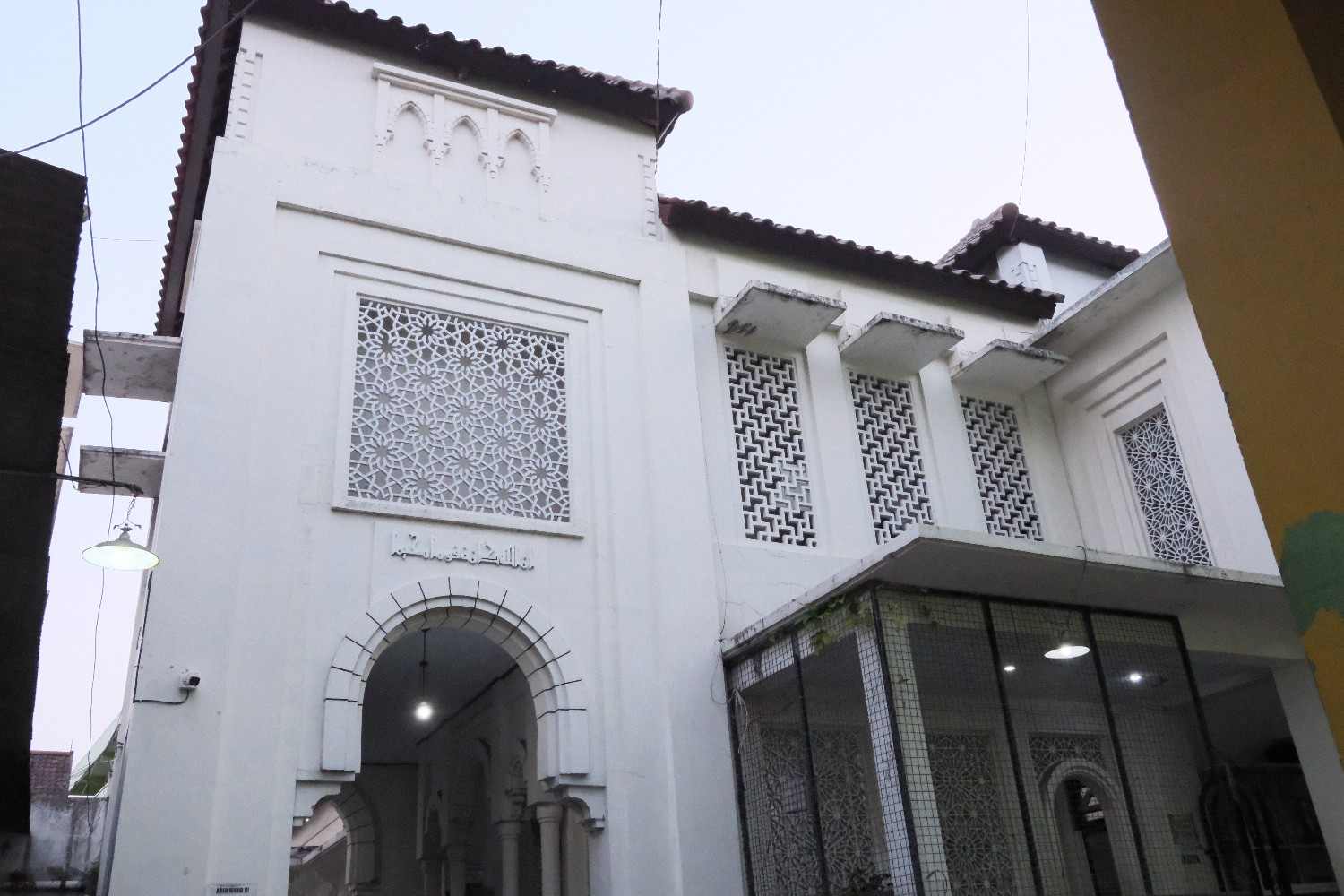
Kelanawisata.id, Yogyakarta - Kotagede has known as a historic district that preserves many relics of the Islamic Mataram Kingdom and is also a center of silver craftsmanship. Among the historic buildings that still stand today is the Masjid Perak of Kotagede, a place of worship with an important story to tell about the development of modern Islam, the community’s spirit of mutual cooperation (gotong royong), and the struggle to defend Indonesia’s independence. Its construction history, its involvement in the independence struggle, and its blend of Javanese architectural elements with Andalusian Islamic influences make the Silver Mosque a cultural heritage site well worth exploring.
Construction of the Silver Mosque began around 1937-1939 on the initiative of several community leaders and Muhammadiyah figures, among them KH Mudakir, KH Amir, and KH Muhsin. The community supported the project through donations of funds, materials, and labor. The mosque later became one of the centers of Muhammadiyah’s worship and religious outreach (dakwah) activities in Kotagede. It was built in response to a growing number of worshippers who needed an additional place of worship besides the Mataram Great Mosque (Masjid Gedhe Mataram).
During the struggle for independence, the Silver Mosque served as a place for training and sending off the Hizbullah and Sabilillah militias before they went to fight against the Dutch and the NICA. These activities are associated with the leadership of Drs. H. Zubaidi Bajuri. After the revolution, the mosque also became a place for nurturing young Muslims through religious activities and martial arts. This shows that the mosque functioned not only as a place of worship, but also as a space for strengthening unity and the spirit of struggle.
The Silver Mosque combines traditional Javanese architecture with Andalusian Islamic architectural influences. Its main hall has a joglo roof supported by four main pillars (saka guru), while the veranda has a limasan roof. Another distinctive feature is the horseshoe-shaped arches in the corridors and staircase, inspired by the architecture of mosques in Andalusia, Spain. The staircase, with its 21 steps, and the geometric ornamentation are also attractions in their own right. In addition, the mosque houses a historic pulpit (mimbar) that was previously used at the Mataram Great Mosque. The silvery-white color further reinforces the building’s identity and its connection to Kotagede’s silver-crafting tradition.
The Yogyakarta earthquake of May 27, 2006, caused severe damage to the Silver Mosque. Reconstruction began on February 15, 2009, and the mosque was officially reopened on January 31, 2013, by Din Syamsuddin, then General Chairman of the Central Board of Muhammadiyah. The reconstruction was carried out while preserving the character of the original design.


