UMBY’s Community Service and Research Program Promotes the Development of Bu Poni’s Tape and Wooden Batik MSMEs in Krebet Tourism Village

Kelanawisata/abw
|
13 Agustus 2026
|
177x Dilihat
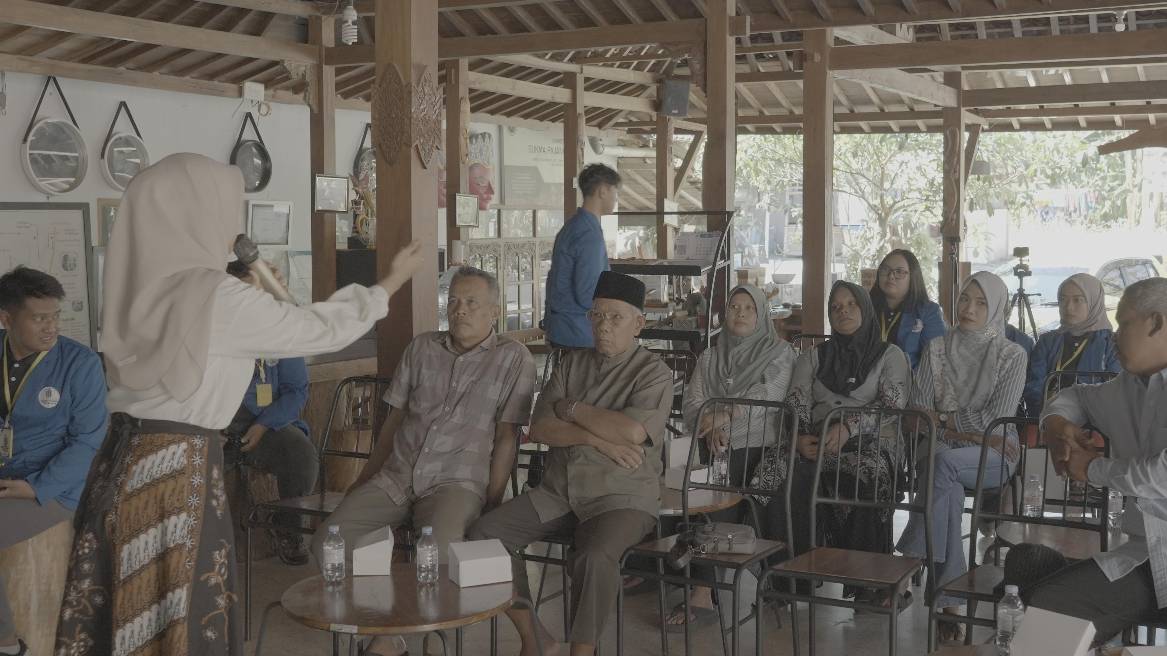
Kelanawisata.id, Bantul – Krebet Tourism Village, Pajangan Subdistrict, Bantul Regency, not only preserves its cultural heritage through wood batik crafts but also possesses growing local economic potential driven by various community-led initiatives. Recognizing this potential, students participating in the Community Empowerment Field Study Program (KKN-PPM) at Mercu Buana University Yogyakarta (UMBY) launched a number of empowerment programs focused on developing local small and medium enterprises (SMEs), particularly Tape Bu Poni and the Krebet Village Wooden Batik Center.
These activities are part of the students’ efforts to apply the knowledge they’ve gained in college while making a tangible contribution to strengthening the local economy. Their approach focuses not only on increasing production but also encompasses product innovation, brand identity building, packaging development, and the use of digital technology as a marketing tool.
Developing the Potential of “Tape Bu Poni” Through Product Innovation
“Tape Bu Poni” is a home-based business in Krebet Village that has become an integral part of the local community’s economic activities. This cassava-based tape product has the potential to be developed as a signature local souvenir.
During the implementation of the KKN-PPM program, the students provided guidance on several aspects of Bu Poni’s tape business. One of these was research on the product’s shelf life or expiration date, as an effort to obtain clearer information regarding the tape’s durability after the production process.
The students also identified other potential uses for cassava, a raw material that had not been optimally utilized until now. Through a product innovation approach, cassava peels—which were previously considered waste—were developed into cassava peel chips. This innovation is expected to create a new product while increasing the value of a material that was previously underutilized.
In addition to product innovation, visual aspects and brand identity were also prioritized. The KKN team helped develop branding designs and packaging labels so that Tape Bu Poni products would have a stronger identity and be easily recognizable to consumers.
Development efforts also included the use of bamboo baskets as an alternative packaging option. This material not only gives the product a more distinctive look that aligns with local identity but also has the potential to increase the product’s value as a souvenir.
To support the production process, the students helped procure a cassava-cutting machine. Until now, the cutting process has been done manually using knives, which requires more time and effort, especially when production volumes increase. The machine is expected to help produce more uniform cuts while making the production process more efficient.
Promoting the Digitalization of Bu Poni’s Tape Marketing
Amid shifting consumer behavior—with consumers increasingly relying on digital information—the presence of MSMEs in the digital space has become a crucial aspect of business development.
In light of this, UMBY’s KKN-PPM students provided guidance on the digitalization of Tape Bu Poni’s marketing. Steps taken included creating and developing social media accounts, registering the business location on Google Maps, producing promotional content, and setting up WhatsApp Business as a communication channel with customers.
This digitalization is expected to make Tape Bu Poni easier to find for potential customers, particularly tourists visiting the Krebet Tourism Village area and its surroundings.
Going beyond simply creating digital accounts, the students also encouraged the use of social media as a platform to share the production process, introduce products, and highlight the stories behind the business and the community that runs it.
Amid shifting consumer behavior—with consumers increasingly relying on digital information—the presence of MSMEs in the digital space has become a crucial aspect of business development.
In light of this, UMBY’s KKN-PPM students provided guidance on the digitalization of Tape Bu Poni’s marketing. Steps taken included creating and developing social media accounts, registering the business location on Google Maps, producing promotional content, and setting up WhatsApp Business as a communication channel with customers.
This digitalization is expected to make Tape Bu Poni easier to find for potential customers, particularly tourists visiting the Krebet Tourism Village area and its surroundings.
Going beyond simply creating digital accounts, the students also encouraged the use of social media as a platform to share the production process, introduce products, and highlight the stories behind the business and the community that runs it.
Thus, marketing is not just about the products being sold, but also about the stories, identity, and local values associated with those products.
Strengthening Wood Batik as the Identity of Krebet Tourism Village
In addition to the culinary sector, UMBY’s Community Service Program (KKN-PPM) also focuses on the creative economy potential that serves as one of the main identities of Krebet Tourism Village: wood batik.
Wood batik is a form of handicraft that combines batik techniques with wood as the medium. A variety of handicraft products, such as masks, sculptures, ornaments, and various souvenirs, are part of the creativity of the Krebet community.
The existence of the Wooden Batik center not only holds economic value but also embodies cultural value that is an integral part of Krebet Tourism Village’s identity. Therefore, the development of this sector requires a strategy that not only maintains product quality but also effectively introduces it to a broader audience and market.
As part of the KKN-PPM program, students assisted with documentation and the creation of digital content to showcase the products and creative processes of the Wood Batik artisans.
A visual approach was used to showcase the process behind each piece, from the wood material and the crafting process to the final handicraft product with artistic value. It is hoped that this content will serve as a medium to introduce Krebet Wood Batik to a wider audience.
The use of digital media is also one way to preserve traditional crafts amid the growth of the creative industry and shifting consumer trends.
Connecting Local Potential with the Digital Economy
UMBY’s KKN-PPM program in Krebet Village is not merely focused on solving short-term problems. More than that, this initiative is designed to lay the groundwork for business development that the community can continue to benefit from after the KKN program concludes.
Product development, branding, packaging, production, and digital marketing form an interconnected series of steps. High-quality products need to be supported by a strong identity, attractive packaging, and marketing strategies capable of reaching consumers.
On the other hand, the potential of Krebet Wood Batik demonstrates that local cultural heritage can go hand in hand with the development of digital technology. Tradition need not be confined to the production space but can be introduced to a wider audience through various platforms.
Through these activities, UMBY KKN-PPM students strive to position the community as the primary actors in developing local potential. The students are there to provide guidance, knowledge, and technical support that the community can subsequently carry out independently.
From Krebet to the Future of the Local Economy
The Krebet Tourism Village demonstrates that a village’s strength lies not only in its natural potential but also in the creativity, skills, and stories of the people who live there.
Bu Poni’s Tape is one example of how home-based food businesses can continue to grow through product innovation and digitalization. Meanwhile, Batik Kayu exemplifies how community traditions and creativity can serve as both an economic strength and a cultural identity.
Through UMBY’s KKN-PPM program, it is hoped that these various potentials can continue to grow and become more competitive. The goal is not merely to introduce products to consumers, but also to build a business ecosystem capable of preserving local values while adapting to the changing times.
In Krebet, local products are not merely made for sale. They carry the stories, skills, culture, and hopes of the community as they grow together.
Contributors: Ayub Fakhrurrozi (UMBY Students)
Curator: kelanawisata.id


