The New Face of Miyos Gangsa: The Sekaten Gamelan Resonates Amid the Flames of the Langenkusuma Torches

Kelanawisata/frm
|
20 Agustus 2026
|
221x Dilihat
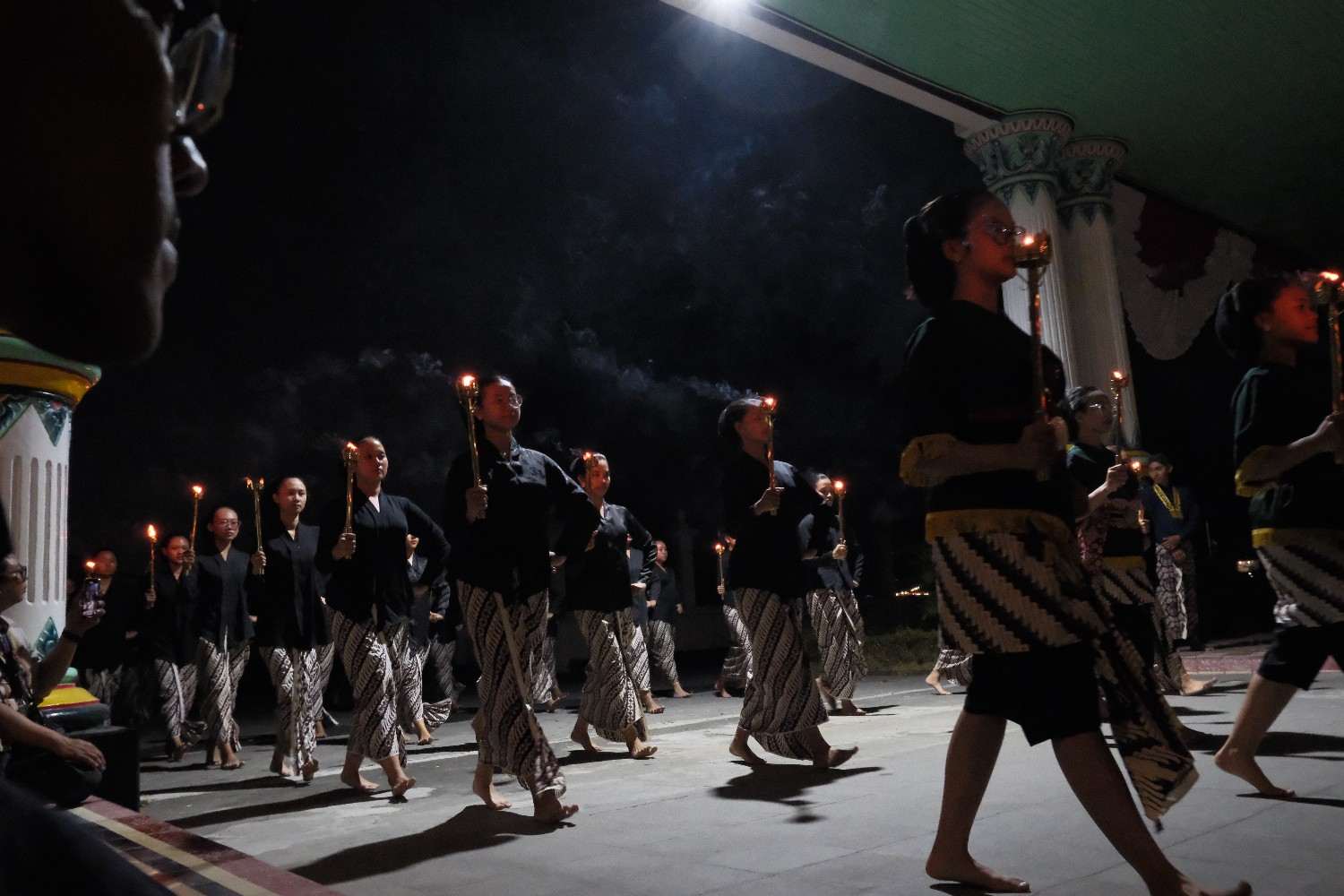
Kelanawisata.id, Yogyakarta - The yellow glow from hundreds of torches held by the Langenkusuma soldiers pierced the darkness in the Kamandungan Lor courtyard, casting magical silhouettes on the ancient walls of the Ngayogyakarta Hadiningrat Palace. Under the Wednesday night sky on August 19, 2026, the scent of incense mingled with the low murmur of excitement from thousands of pairs of eyes awaiting the emergence of two sets of sacred gamelan instruments heading toward the Gedhe Kauman Mosque. The sacred atmosphere grew even more intense as the five Princesses of the Palace—GKR Mangkubumi, GKR Condrokirono, GKR Hayu, and GKR Bendara—began scattering udhik-udhik, small coins and flowers that marked the start of the series of celebrations for the Prophet Muhammad’s Birthday (Maulid Nabi Muhammad SAW) in the year 1960 Be.
This year’s Miyos Gangsa procession brought a breath of fresh air to the preservation of Javanese culture by introducing several significant changes to its ceremonial format. While the gamelan is typically brought out just before midnight, this time the procession began moving as early as 8:30 p.m. This change in timing provided more opportunity for the public and tourists to savor every moment of the procession without losing its solemn atmosphere.
A Symphony of Innovation and Light
The most striking feature distinguishing this year’s event was the “walking gamelan” performance. Unlike in previous years, when the instruments were played only after reaching their destination, this time the sounds of Kyai Guntur Madu and Kyai Naga Wilaga could be heard from the very first step as the procession emerged from the Bangsal Pancaniti. The rhythmic melodies played while walking created a theatrical atmosphere never before witnessed in the history of modern Miyos Gangsa.
The presence of the Langenkusuma Soldiers carrying torches served as a stunning new visual element. The dancing flames along the route to Pagongan provided natural illumination for the Abdi Dalem carrying the gamelan. As the procession passed Bangsal Pagelaran, the audience joined in by lighting candles, creating a sea of small lights to welcome the arrival of the heirloom musical ensemble.
The Bregada Formation and the Sacred Path
The procession was divided into two large groups, each closely escorted by elite soldiers. The Prawirotomo Brigade stood at attention, escorting the Sekati Kyai Guntur Madu Gamelan toward Pagongan Kidul. Meanwhile, the Jogokaryo Brigade marched alongside the Sekati Kyai Naga Wilaga Gamelan toward Pagongan Lor at the courtyard of the Gedhe Kauman Mosque. In their midst, the Suronoto Brigade served as a loyal escort, ensuring the procession’s rhythm remained in sync.
Yudha Kawendra, a representative of Konco Tepas Kaprajuritan, explained that the inclusion of new brigades—such as Suronoto and Langenkusuma—was indeed designed to enhance the procession’s aesthetic appeal and philosophical significance. According to him, opening access to the Bangsal Pagelaran with a torchlight procession aims to make the public feel more connected and directly involved in preserving this ancestral heritage.
A Cultural Tourism Magnet
The appeal of Miyos Gangsa in this new format has proven capable of drawing attention across geographical boundaries. Laksmita, a college student from Palembang, admitted to being captivated by the strength of the cultural roots that have been preserved despite the innovative touches. For her, witnessing this procession is not merely watching a performance, but a rare opportunity to learn about Javanese identity and history firsthand.
The crowd was not dominated solely by local residents of Yogyakarta. Tourists from as far as Garut and even from abroad packed the streets along the route, proving that the Sekaten tradition remains a cultural magnet relevant to the modern world. This procession marks the beginning of a long series of celebrations that will culminate in the commemoration of the Prophet Muhammad’s birthday, conveying a message of harmony between spirituality and cultural arts.


